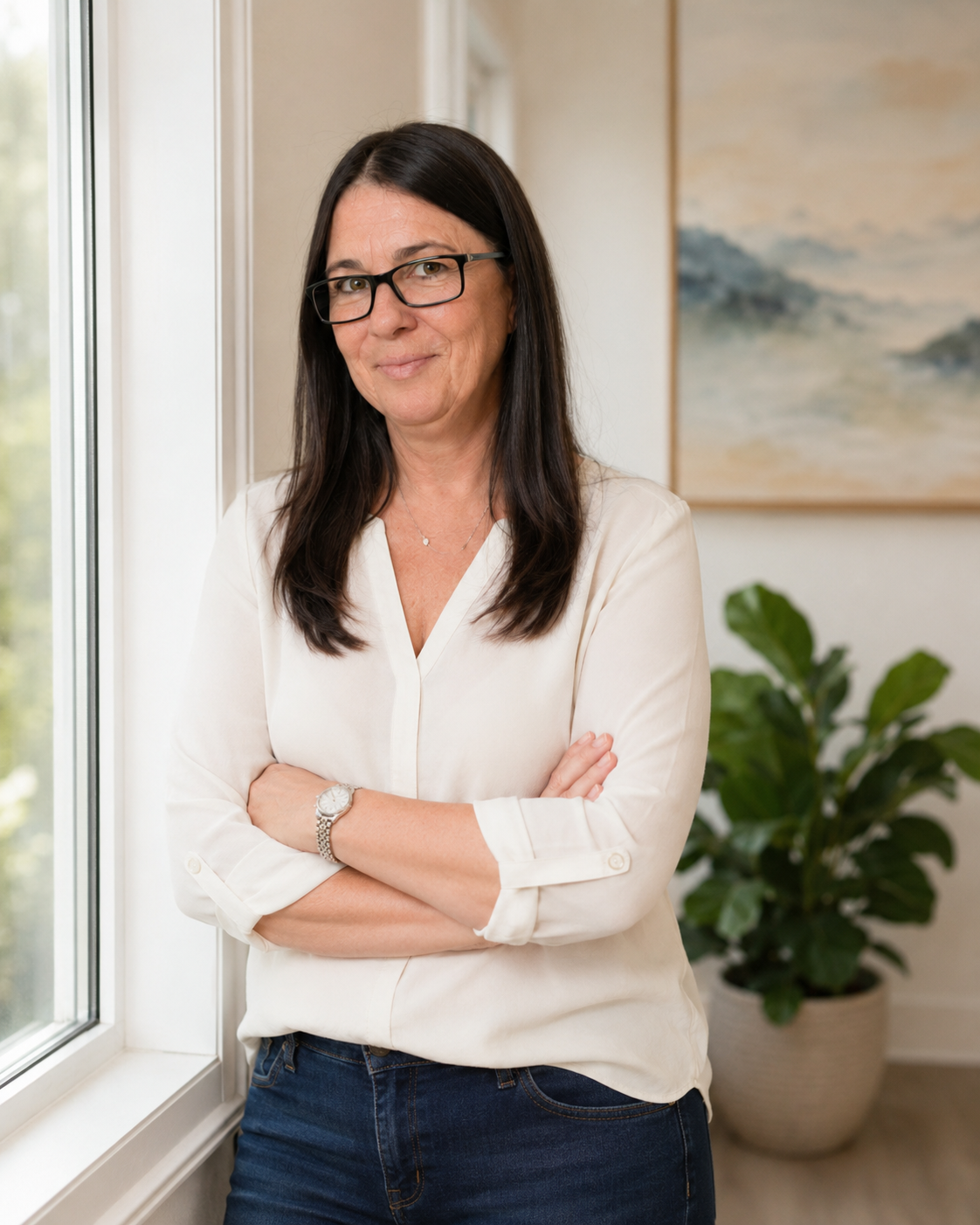
Hi, I’m Martha.
The OBM who fixes why your business keeps breaking, not just how it looks on paper.
Most businesses don't fail because of bad ideas. They fail because of what happens between the idea and the outcome, the decisions that don't get made, the processes that nobody follows, the team that's capable but unaccountable, and the founder who ends up doing everything themselves because it's faster than explaining it to someone else.
I've spent over 12 years watching that pattern play out in agencies, coaching businesses, SaaS companies, and consultancies of every size. And I've spent that same 12 years knowing exactly how to break it.
That's why I do this work.
Where This Started
I didn't come from the online business world. I came from the corporate trenches, and that changed everything.
Before Martha's SOS, I was a Quality and Best Practice Training Manager. Over a decade in corporate environments, working with teams, systems, and performance frameworks, I learned something most OBMs never get the chance to learn in a classroom: why people do what they do, and what it actually takes to make a process stick.
The tools change. The project management platforms, the CRMs, the automation software, all of that evolves constantly. But human behaviour doesn't. The reasons a team doesn't follow a system today are the same reasons teams didn't follow systems twenty years ago. And if you don't address those reasons at the root, you can document every process in the business and watch them gather dust.
When I made the move into online business management, I brought that understanding with me. It shapes how I diagnose operational problems, how I design systems, how I manage teams, and how I measure whether what we've built is actually working.
It's not a conventional OBM background. But it's the reason my clients get different results.

The Methodology
Why most systems fail, and how behaviour science changes that
Here's something most operational frameworks miss: a system isn't a document. It's a behaviour. And behaviours don't change because you wrote down the process, they change when the conditions around them change.
That's the foundation of how I work.
What is ABC Analysis in business operations?
ABC Analysis is Antecedent, Behaviour, Consequence, and is a framework from applied behaviour science that I use to diagnose why operational problems are actually happening in a business.
The Antecedent is what happens before a behaviour: the trigger, the prompt, the environment. The Behaviour is the specific action (or inaction) we're looking at. The Consequence is what happens as a result and, crucially, whether that consequence makes the behaviour more or less likely to happen again.
Most operational fixes focus on the Antecedent: change the process, update the SOP, implement a new tool. But if the consequences, the reinforcement, the feedback, the accountability structures, don't change, the behaviour goes right back to what it was before.
I work at the consequence level. That's where lasting change actually happens.
What is Performance Pinpointing?
Pinpointing is the practice of defining the specific, observable behaviour you want to see. Rather than vague goals like "improve communication" or "be more accountable." You can't measure "better attitude." You can measure whether the weekly report was submitted by 5pm Friday.
When you pinpoint the exact behaviour, you can track it, reinforce it, and build systems around it. That precision is what separates operational change that sticks from change that lasts three weeks and quietly disappears.
Why it matters for your business:
When I build systems for a client, I'm not just designing the workflow. I'm designing the conditions under which the right behaviours become the path of least resistance for every person on the team. That's a different standard of work, and it's why the businesses I work with don't find themselves six months later wondering why nobody's following the processes we built.
Let's be clear
What I am — and what I'm not.
If you've been searching for "VA" or "assistant," we should have a quick conversation before you go any further.
Not a Virtual Assistant
A VA handles tasks. Inbox management, scheduling, admin. That's valuable work, but it's not what I do. I operate at the strategic level: managing teams, building operational infrastructure, running projects, and taking ownership of outcomes that move your business forward.
Not a Project Manager
I manage projects, but I'm not a PM who ticks boxes and updates Gantt charts.
I design the system the project runs on, manage the people delivering it, and ensure the operational conditions are in place for it to actually succeed.
Not a Business Coach
I don't advise from the sidelines. I work inside your business, inside your team, and inside your systems.
The difference between a coach and an OBM is the difference between being told what to do and having someone do it with you.
How I work
The principles I operate by — in my business and yours.
Transparency over territory
I don't gatekeep my methods or hide behind jargon to make myself seem irreplaceable. I show my clients exactly how things work — because a business that understands its own systems is a business that can scale. My goal is to build something you can run confidently, not something that keeps you dependent on me.
Data over gut feel
Decisions made on feeling alone are expensive. I use performance data, behavioural evidence, and operational metrics to identify what's actually happening in a business, not what it feels like is happening. That distinction matters more than most people realise.
People make systems work
Technology is only as good as the humans using it. I've seen businesses spend thousands on the perfect project management tool and watch it sit unused because the behavioural conditions weren't right. I build for the people, not just the platform.
Sustainable over heroic
I don't believe in operational heroics, staying up until midnight to hit a deadline that should never have been set in the first place. I design engagements with realistic timelines, manageable workloads, and clear boundaries for me and for my clients.
Ethical practice … always
I will not participate in, design, or recommend operational practices that are deceptive, manipulative, or unsustainable. Fake urgency, manufactured scarcity, exploitative team structures, none of it. The businesses worth building don't need tricks.
“Working with Martha has been a complete game-changer!
She has an incredible ability to bring structure, clarity, and momentum to complex projects through streamlining our internal processes to ensuring our client communications are seamless, Martha consistently delivers at the highest level.”
— Scott Bostley

Outside of work, I'm someone who genuinely loves the problem-solving part of what I do. There's something deeply satisfying about walking into a business that feels chaotic and leaving it running clearly, watching a founder take a breath for the first time in months because things are finally in order.
That's what this is about. Not the tools. Not the templates. The actual change in how a business feels to run.
If that's what you're looking for, I'd love to talk.



Ready to build a business that works without you in the middle of everything?
Start with an Ops Clarity Session — 90 minutes, a written action plan, and total clarity on what to fix first.